Goats are very similar to sheep and are closely related, but they are not the same as sheep. There are over 1 billion goats in the world, and they are found in many different places! They were domesticated 10,000 years ago. There are around 300 different domesticated breeds of goats. Goats are curious and independent animals; goats in a herd usually have different ‘ranks’, as in some goats are seen as more important than others. Goats make bleating noises to tell others their thoughts and feelings, and usually herd members understand them! An average goat lives for around 8-14 years and can weigh from around 54 to 77kg (120-170lbs). Myotonic goats are known as fainting goats because when they get scared or surprised, their muscles become stiff for a period of time, and then they fall over!
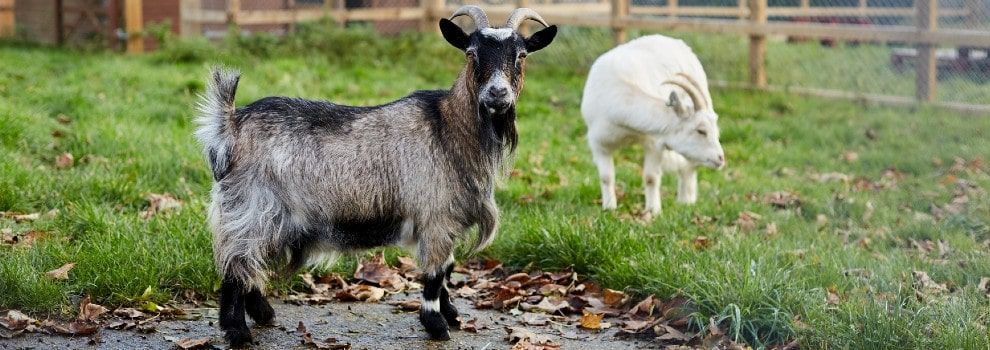
Goats can be many colours, such as brown, black, and white. There are many different goat breeds, but some of them are the Boer Goat, American Pygmy Goat, Nigerian Dwarf Goat, Saanen Goat, Spanish Goat, Angora Goat, LaMancha Goat, Arapawa Goat, Madurai Goat, and the Damascus Goat. Sadly, the Arapawa Goat is one of the rarest goats and is believed to be the last descendant of the English Milch Goat. They are native to New Zealand and are on the conservation priority list. Goats are bred for their meat, milk, and sometimes hair fibers (most commonly the Angora Goat), and skin. Their most common wild predators are Wolf, Leopards, Lynxes, and Brown Bears. It’s believed that the earliest type of goat to be domesticated was the Bezoar Ibex (a wild goat) and was domesticated by Neolithic farmers. Males are usually larger than females and have larger horns. Females (also called does or nannies) live together with their children, and the males (also called billys or bucks) live together in smaller groups and in mating season they fight for the females. They give an average of 1 or 2 babies after waiting 6 months. There are many different wild and domestic goats with various being listed as endangered, near threatened, vulnerable, least concern, and critically endangered.
 Bella's World