Covering only a minuscule 6% of Earth’s surface, tropical forests, also known as rainforests, are some of the most biodiverse ecosystems on our planet. These dense, lush environments are sanctuary to a remarkable 80% of all known species. Located near the equator, they boast a warm, humid climate; abundant rainfall; and a wet, steamy atmosphere. Their significance cannot be overstated, as they play a crucial role in absorbing 7.6 billion tonnes of carbon every year, making them essential for the well-being of our planet.
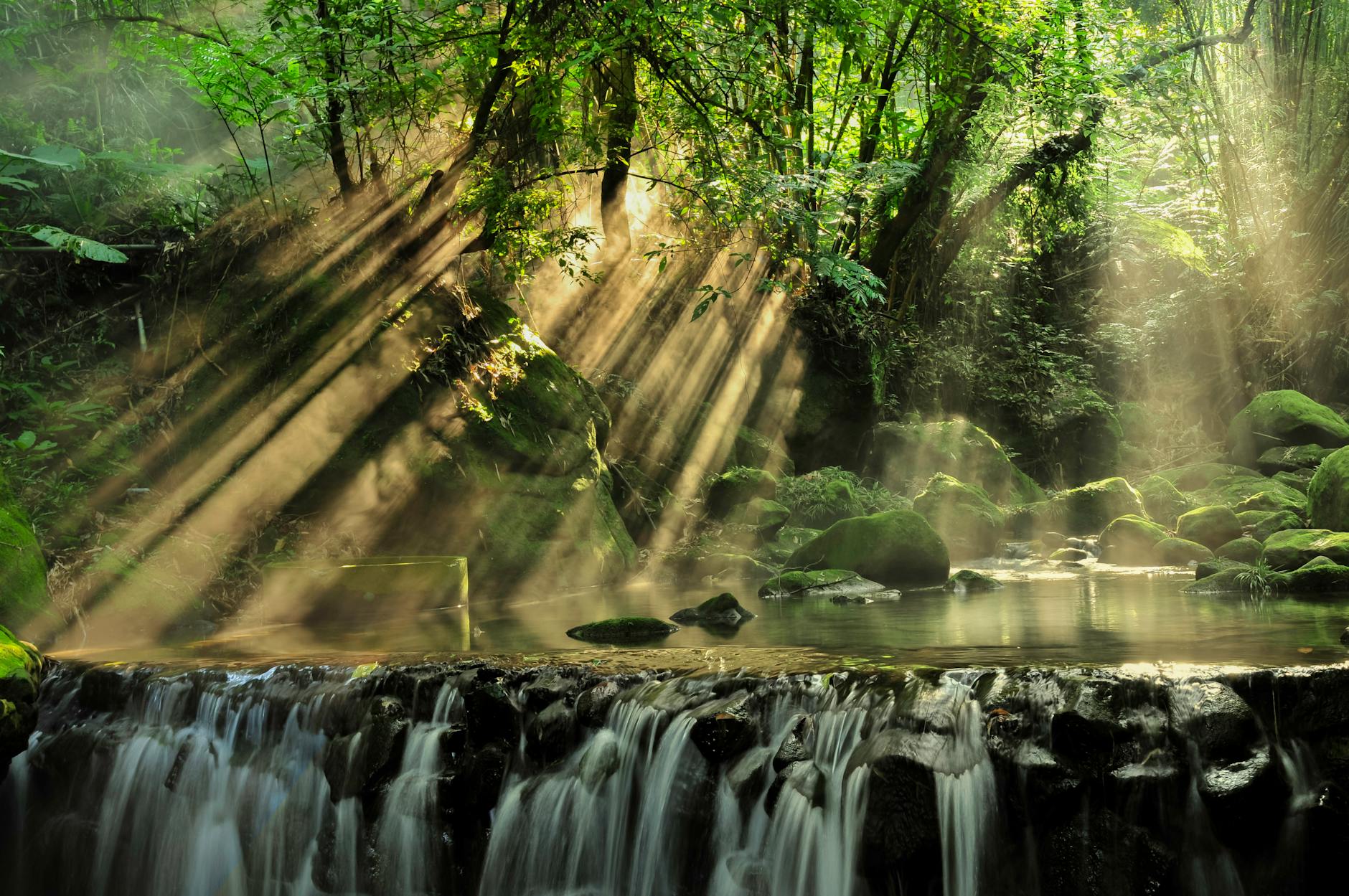
Tropical forests are complex and diverse ecosystems, with several layers that contribute to the health of the forest. The bottom layer, known as the forest-floor, is dark and shaded due to the towering trees blocking out most of the sunlight. It is thick with vegetation, carpeted with a layer of decaying leaves and dead trees, known as humus. The next layer is the understory, which is cool and shady, with limited sunlight. Liana vines and creepers take root in the forest-floor and climb up to wrap around trees. Above that is the canopy, a continuous layer of tree-tops that is home to various animals such as monkeys, big cats, and birds. The uppermost layer is the emergents, consisting of the tallest trees in the rainforest, approaching heights of 60 meters and emerging from the canopy.
Undoubtedly, the most iconic and famous of these is the Amazon, a beacon of life and biodiversity that spans eight South American nations. This remarkable rainforest stands as one of the most diverse places on the planet, providing a home to an array of fascinating creatures including jaguars, howler monkeys, and macaws. In Central Africa, the expansive Congo Basin covers an area larger than Alaska and is aptly nicknamed ‘the lungs of Africa’ for its incredible capacity to absorb carbon, even surpassing the mighty Amazon in this regard. Within this vast expanse reside rare and endangered species such as the okapi, gorillas, and chimpanzees. Additionally, the tropical forests of Papua New Guinea in South East Asia and Madagascar’s Makira natural park also hold noteworthy status. Discover more about these incredible ecosystems with the links provided below.
 Bella's World