We Can See the Daisy!

Hello readers, and today we are going to look at the daisy. Important information will be in italics.

Daisy, any of several species of flowering plants, belonging to the aster family (Asteraceae). The name daisy commonly denotes the oxeye daisy (Leucanthemum vulgare) the Shatsa daisy (L.x superbum) and the English, or true, daisy (Bellis perennis).

These and other plants called daisies are distinguished by a composite flower head composed of 15 to 30 white ray flowers, surrounding a centre consisting of bright yellow disk flowers, though other combinations are common. The oxeye daisy is native to Europe and Asia but has become a wild plant in the United States and elsewhere, the perennial grows to a height of about 60cm (2 feet) and it has oblong incised leaves and kong petioles (leafstalks). Solitary flower heads are about 2.5 to 5cm (1 to 2 inches) in diameter and the ray flowers are white in colour. The cultivated Shatsa daisy resembles the oxeye daisy but has larger flower heads that may reach a diameter of 10cm (4 inches).

Members of the genus Bellis are perennials that have solitary flower heads born on long stalks; the disk flowers are yellow, the ray flowers white or purple. The English daisy (B. perennis) is often used as a bedding plant, it has numerous spoon-shaped slightly hairy leaves near its base that form a rosette and the plant has leafless flower stalks and hairy bracts (leaflike structures) below the flower heads.

Some varieties of the English daisy have double flowers; others may have pink or red ray flowers surrounding the right yellow disk. Like the oxeye, the English daisy is native to Europe but has become a common wild plant in much of North America.

Other daisies include the Gerbera (Gerbera jamesonii) of the floral industry, the marguerite daisy (Argyranthemum frutescens), the painted lady daisy (Tanacetum coccineum), the pyrethrum daisy (Chrysanthemum cineraiifolium) and various members of the genera Chrysanthemum and Erigeron.

By botanist Lotus

I Chose the Rose!

Welcome back to Bella’s World and today we are going to discover more about your common types of roses, important information will be stated in bold.

The rose (genus Rosa) is a genus of 100 species of perennial shrubs in the rose family (Rosaceae). They are native primarily to the Northern Hemisphere. Many roses are cultivated for their beautiful flowers, range in colour from white through various tones of yellow and pink to dark crimson and maroon; most have a delightful fragrance which varies according to the variety and climatic conditions. Numerous species are native, with smaller numbers being native to North America and a few to Europe and northwest Africa. Roses from different regions of the world hybridise readily, giving rise to types that overlap the parental forms, making it difficult to determine basic species.

Physical description

Roses are erect, climbing, or trailing shrubs, the stems of which are usually copiously armed with prickles of various shapes and sizes commonly called thorns. Leaves are alternate and pinnately compound (i.e feather-formed) usually with oval leaflets that are sharply toothed. Flowers of wild roses usually have five petals, flowers of cultivated roses are often double (i.e, with multiple sets of petals). Rose flowers’ size ranges from tiny miniatures 1.25 (0.5 inch) in diameter to hybrid flowers more than 17.5cm (7 inches) across. Rose plant’s fleshy, sometimes edible, berrylike “fruit” (actually the floral cup) is known and usually ranges from red to orange in colour.

It can become infected by a number of diseases, most of them caused by fungi. Powdery mildew appears as a grayish white moldlike growth on the surface of young leaves and stems. Black spot fungus appears as conspicuous black spots and causes them to fall off; rust is also a common disease of roses. Aphids are a common insect pest on the leaves and young stems.

Major species and hybrids

Flowers of the damask rose (Rosa damascena) and several other species are the source of attar of roses. Many species, particularly the rugosa rose (R.rugusa), produce edible rose hips, which are a rich source of vitamin and are sometimes used in preserves.

There are several major classes of garden roses. The best-known and most-popular class of rose are hybrid tea roses, which accounts for the majority of roses grown in greenhouses and gardens and sold in florist shops. Hybrid teas come in the complete range of rose colours and have large symmetrical blossoms. This resulted from the crossbreeding of frequently blooming but fragile tea roses with vigorous hybrid perpetual roses. Hybrid perpetuals achieved great popularity until they were supplanted by the hybrid teas in the early 20th century.

Polyantha roses are a class of very hardy roses that produce dense bunches of tiny blossoms. Floribunda roses are hardy hybrids that resulted from crossing hybrid teas with polyanthas. Grandiflora roses are relatively new hybrids resulting from the crossbreeding of hybrid teas and floribunda roses. Grandifloras produce full-blossomed flowers growing on tall hardy bushes. Among the other classes of modern roses are climbing roses, whose slender stems can be trained to ascend trellises: shrub roses, which develop into large bushes; and miniature roses, which are pygmy-sized plants bearing tiny blossoms. Altogether, there are thousands of identifiable varieties of roses in those and other classes.

By botanist Lotus

Domestication

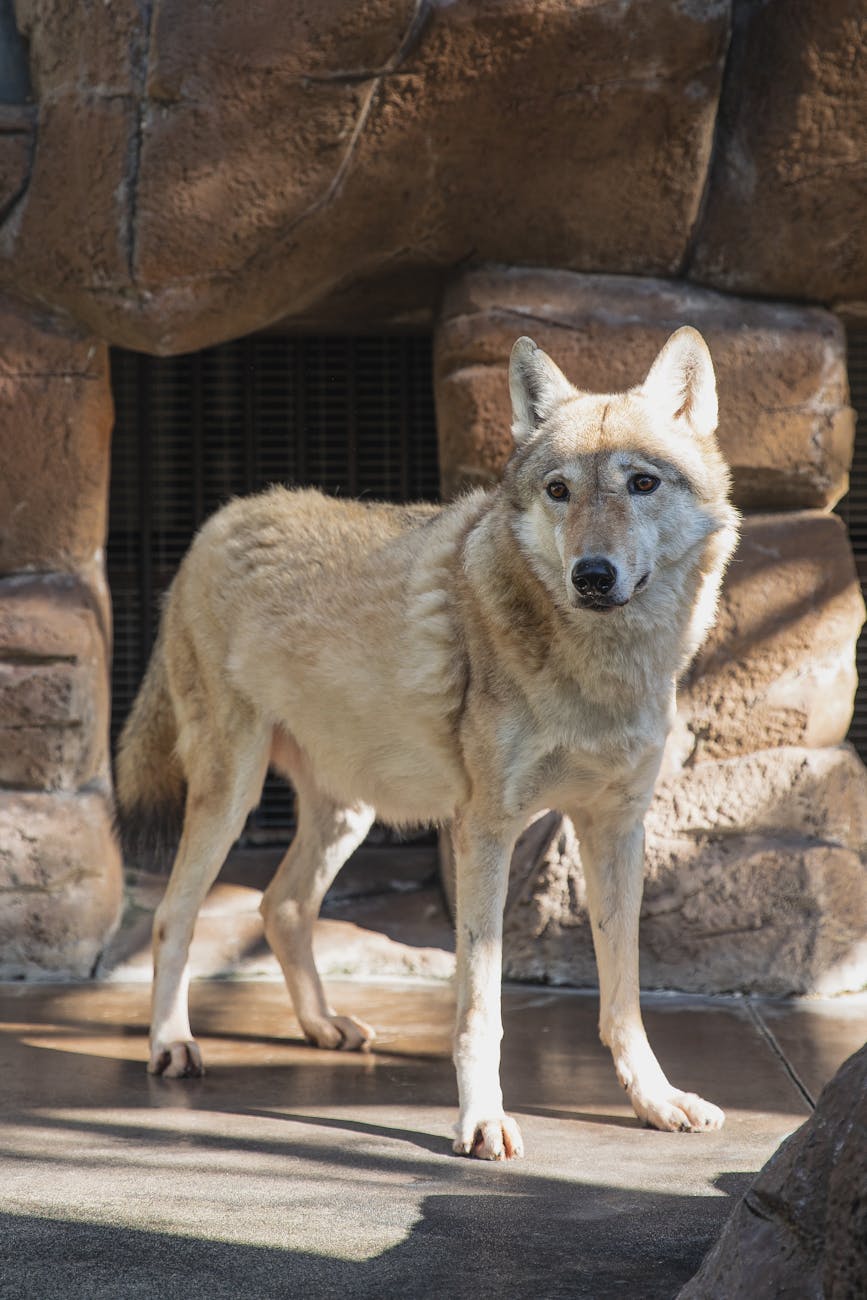
Hello Bella’s world, today we’ll be looking at our friendships with animals. Humans have loved animals for millennia so we ended up domesticating them. However we didn’t just domesticate wolves we domesticated wild horses and livestock. Let’s dive in to the HISTORY of domestication!

Photo by Kat Smith on Pexels.com
History

Around 15,000 to 40,000 years ago a wolf found a human settlement. Probably smelling some meat or hearing their chants, intrigued by these unusual creatures the wolf decided to head in. Most humans (rightfully so) thought wolves were dangerous but a few felt bad for the wolf and gave it some meat. Soon the wolf brought its pack. Other packs caught on to the free food. Evolution realised that wolves hunting instincts weren’t as necessary. Soon dogs came through evolution. We began to breed different types of dogs, some better at hunting, others companions for noble people and others made to guard royal homes.

Hope you had fun learning about domestication. Tell me in the comments your favourite dog breed. Stay curious and have a frogtastical day!

– Froggy (•^•)

The Magic of Spring

Hello Bella’s World, SPRING HAS SPRUNG! Birds are chirping, deer are peeking through and lambs are being born. The tranquil season of new life and light is here, however not everything is so calm. Read on to find out and comment your favourite spring experience.

Nesting

Many birds are sorting out their nests. Building a nest takes time and a ton of different materials. This includes sticks, moss and bits of fluff. I’m currently watching the magpies (Ink and Blanca) build their nests, defending it from crows and winning. A good idea is to lay out materials for a nest in your garden so the birds can pick them up.

Reawakening

Hedgehogs are now waking up from their 6 month hibernation naps. From October to April they fall asleep and conserve energy in small, safe areas. In the southern hemisphere it’s April to October. Please be careful around hedgehogs as they are fragile or you’ll get prickled. Recently, in the UK they a declining species. For next winter maybe set up a hedgehog house. https://www.wildlifetrusts.org/actions/how-build-hedgehog-home.

If you want to help out hedgehogs donate to conservation charities and raise awareness. Don’t feed them either otherwise they become too dependent on you. To find out more go to https://www.britishhedgehogs.org.uk/ and find out how you can help out hedgehogs.

Hope you have a frogtastical day! Let’s enjoy spring together and don’t forget to participate in the hide! https://bellasworld.blog/2024/03/29/exciting-news/ I remember seeing a Robin with a stick when I 2 or 3, it was a magical experience.

– Froggy

Guanacos

Guanacos are mammals belonging to the family of Camelids (or Camelidae). You might have seen them mentioned in the comments of my post Vicuñas. They are the wild ancestors of Llamas and both of these Camelids live at similar heights, but the Guanaco tends to live further down. They live in Peru, where they are naturally from, Chile, and Argentina, though smaller populations of them might live in the rest of South America. At one time, they were hunted for their thick, warm fur (as were Vicuñas). They usually stand between 1-1.3m, and an adult can weigh around 90-160kg (198.4-352.7lb). Like Alpacas, Vicuñas and Llamas, these friendly animals, when feeling threatened and as a mechanism of defence spit surprisingly accurately at their targets. They live in herds with on adult male, numerous females and several young guanacos (called Guanacquitos or Chulengos). This is because they have less chance of being hunted if a predator is near, as there are many targets to choose from and it would be confusing.

Guanacos use sound and body to show how they feel. For example, when the ears are up, it means the guanaco is relaxed. Ears forward means the guanaco is alarmed, and ears laid flat shows aggression. A tail pointing down is normal, straight out is a sign of an alert guanaco, and straight up is an aggressive signal. A nose-to-nose encounter is a type of greeting, while slouching down indicates submission. They also use different sounds to communicate, such as high pitched shrills, snorting, shrieking and making a bleat to signal alarm.

Guanacos are the largest herbivores in South America’s dry areas, but surprisingly they do not need water on a day-to-day basis. They get all the nutrients and moisture from the food they eat and have a special digestive system within the stomach to digest the different types of plants they eat. Guanacos give birth to young every other year, and their main predators are mountain lions. Usually, females give birth to one or two young at around the same time, as mountain lions can only carry of one or two young at a time, giving the young more chance of survival. Newborns can stand just five minutes after birth! This is so they can follow their mother immediately. They will be weaned at 6-8 months, and leave their mother at 11-12 months, young males will form a group with other young males, and young females join a family group.

Eco friendly art

Hello Bella’s World, today I’d like to introduce to some eco friendly art. Art doesn’t have to be expensive, in fact the method today is super cheap! It’s also good for the environment. Today it’s SCRAPBOOKING! You can use pretty much anything to fill up your scrapbook.

My scrapbook has very few items in it but it still looks effective. I use a few coloured pens, a book which I HATE, post it notes and a sketchbook. You can rip up the pages and create different shapes and outline them with the pens. I also create lyric pages where I write my favourite lyrics from a song and arrange them. I draw around the lyrics and rip up the pages. It’s a fun and creative way to let out anger to! You don’t have to buy much and you can recycle multiple different material that otherwise would have ended up in landfill.

Have fun and enjoy your day,

– Froggy

Exciting News

Photo by Ellie Burgin on Pexels.com

Hello Bella’s World, I’ve had a great break and am back with great news! I am launching a project called The Hide. I’m hoping that over summer and the rest of spring, we the Bella’s World community can record data every month and comment it down below. Our new project will be launched April 1st. You can record pretty much anything from bees to bats and it will still count. I’m hoping that together as a community we can be a living database and see population trends. This means we can help out endangered species. You can do this by commenting all wildlife for a month down below. Anyone can participate and enjoy the fun.

This also leads into baby magpies! The two magpies (Ink and Blanca) are building a large nest. According to the RSPB, magpies lay 5 – 8 eggs which is a lot for any creatures. I’d like you all to vote on these names for the babies. If you have unique names comment them and tell me about your unusual magpie experiences in the comments.

It’s great to back and have a great day!

– Froggy

Climate Activists

Climate activists are undeniably the most influential people in the progress of restoring our earth’s thriving climate, as they inspire many to make small changes as well as attend climate events such as protests and gatherings. The effort that these people put in to inspire, make a difference and fight for our planet is beyond belief and inspiring in itself. Although, in this article we are talking about Climate Activists, it is important to recognise the impact of scientists, policymakers, communities and other inspiring individuals and groups, who are giving up there lives to join the fight for our planet. The wide diversity of voices in the climate movement makes supporting our earth, a chance for people around the world to come together as a team to put an end to global warming. As a part of our new lead the change section, this article will showcase how various climate activists have created and lead change.

Although, we have only highlighted 3 activists in this article, their are many more influential figures in the climate movement who are leading their own change. However, though individual efforts are making a huge difference, it is is when scientists, activists, policymakers, governments, communities, charities and everyone else, come together globally, that’s when the most change occurs. Below are 3 practical and easy ways you can help the movement.

-Bella

Message to readers: We would like you to know how much your feedback means to us, as it enables us to provide you with more content you enjoy, so if you are able to please share your feedback with us. Additionally, we would love to hear about your experiences and what you have been up too. Thank you everyone for your amazing support. We hope to hear from you soon.


Sunflower Power!

Welcome to or welcome back to Bella’s World! My name is Lotus and today we are going to focus on the power of Sunflowers!

Sunflowers (also known as Helianthus) is native to North and South America. It is an annual herb with a rough, hairy stem. A Sunflower is high and broad, coarsely toothed and rough leaves arranged in spirals. The attractive heads of flowers are 7.5 – 15cm wide; the disk flower (the centre of the flower) is either brown, yellow or purple but for sunflowers, it is brown. As you already know, there are yellow petals on a sunflower.

These flowers are valuable economically (which means it can be processed into a variety of products) and ornamentally. The uses for each part of the flower are the following: the leaves are used as fodder (food, especially dried hay or straw), the flowers are have yellow dye, the seeds contain oil and is used for food (it also has olive or almond oil for table use), the oil is used in soap and paints as a lubricant (a substance used to reduce friction) and the seeds can be eaten dried, roasted or ground.

By botanist Lotus

Grey Wolf

Grey wolves are found in North America, Europe and Asia (from the Arctic in the north to as far as Mexico in south). However, these large carnivores have disappeared from many areas because of hunting. People often fear wolves although, despite their grizzly reputation, wolves rarely attack humans.

These types of wolves vary in size. The largest wolves and found in the north. They also vary in colour, from grey and brown fur to almost black and white wolves live in the Arctic tundra. wolves use facial expressions, body language AND sound to communicate with each other. They howl to let other species know where they are whilst they are hunting or defending their territory.

Wolves often hunt large prey e.g caribou moose, musk oxen. These animals are very dangerous. Although individual wolves can attack on their own, they usually hunt prey in a pack.

Here are some facts you may not know about grey wolves:

1 – Wolves use many cues to find prey, including scent and visual information. Once the prey is located, they get as close as possible without being seen

2 – Wolves chase prey and make them run so they can find the weakest members of the herd to attack, which in this case is called caribou calf

3 – The caribou The calf runs in the opposite direction to its mother and caught by the wolves

Wolves usually live in packs of 2 – 40 animals. There is a clear order in each pack of wolves. The alpha male and female are dominant – they eat first at a kill and are the only animals in the pack to breed. This wolf below is showing dominant behaviour. Lower ranking wolves show submissive behaviour, which includes crouching and holding their ears back and down.

Photo by Ryutaro Tsukata on Pexels.com

Grey wolves violently use their body to attack. Firstly, when showing aggressive or dominant behaviour, the hairs on the back of a wolf’s neck stand on end. These hairs are known as the wolf’s hackles. Domestic dogs also behaviour in a similar way. Another scary thing about grey wolves is they have strong jaws and sharp teeth. It uses its long, curved canines to grasp prey, while its teeth further back slice the killed animal into chunks that the wolf can swallow. Eye contact for wolves is also important. As a dominant animal looks a lower ranking wolf in the eye . Additionally, wolves have scary snarls! A wolf snarls to show its sharp teeth. Its snarl may be a sign dominance or aggression, or part of the wolves self defence.

Wolfs have many relatives. The coyote is closely related to, but smaller than a grey wolf. They are found across North and Central America, other than the far north of Canada. Despite its name, the wolverine is not a member of the canid family. It is more closely related to stoats, weasels and otters than it is to dogs, suprisingly. The Arctic fox is also similar to grey wolves. Arctic foxes are small predators found in the arctic regions. Its muzzle, legs and ears are short compared to those of other canids.